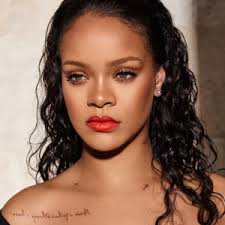
Continued Explorations: Role of the Performer: Rihanna

Biography

Robyn Fenty, better known by her middle name of Rihanna, was born on February 20, 1988 in Saint Michael, Barbados. At age 15, she formed a unnamed girl group with two other classmates, but only she stood out after an audition with Evan Rogers, an American record producer. She travelled to the U.S. and stayed after performing for Jay-Z and signing with Def Jam. 

In 2005, her debut album, Music of the Sun, was released and sold over 2 million copies worldwide; it featured her first single, Pon de Replay, which peaked at No.2 on the U.S. Billboard Hot 100 Chart. Her second and third albums followed in the next couple of years. 

Shortly after, she shifted from the lively, island girl to the slightly darker, more fierce artist we know today. Her fourth album, Rated R, was released in November 2009 debuting at No. 4. Rolling Stone stated that Rihanna “transformed her sound and made one of the best pop records of the year”. 

She’s collaborated with a wide variety of artists including Britney Spears, T.I., and Maroon 5, to name a few. In 2014, she moved to Roc Nation where she remains. Her music career has been and still continues to be wildly successful, as her ninth album is set to release some time this year.

Rihanna – Pon de Replay
Written By: Alisha Brooks, Carl Sturken, Evan Rogers & Vada Nobles 
Released: May 24, 2005, U.S.
Rihanna ft. Mikky Ekko – Stay
Written by: Justin Parker, Elof Loelv & Mikky Ekko
Released: January 7, 2013, U.S.

Musical Elements

Melody

The two songs I selected have completely different melodies. Where Stay is slow and droning, Pon de Replay is fast and exciting. The constant factor is Rihanna’s unwavering voice and commitment to giving her best to any track laid in front of her. Her voice accompanies both of the songs with ease, never overwhelming or being overpowered.  We witness her in these songs, portraying both ends of the emotional spectrum and delivering the needed rhythms, tempos, and pitch to conform to these emotions. 

Timbre

Though just a performer of these songs, Rihanna sings as though she wrote every word herself. Her soprano range isn’t afraid to push its boundaries often getting a lot deeper in Stay, but never losing its place. In Pon de Replay, she keeps to her comfort zone instead of yelling the lyrics as most artists would with such an upbeat tempo. Mtv.com says, “Her singing voice, even when it’s sprightly turning abstract syllables into a flirty hook, always rings with flawless, reliable authority.”

Rihanna is undeniably one of the greats of her time and I’m almost certain that her legacy will endure for generations to come. She’s unafraid to take risks and collaborate with artists outside of the Pop genre. She seems to be unafraid to cross genres in her own music as well, drifting between heavy reggae beats to swooning R&B ones. Despite the constant changing, she manages to remain true to herself and her sound, rarely stepping outside of a comfortable range and pitch. 

She’s not only a musical giant, but she also serves as an influential figure in the world. Music has become sort of a stepping stone for her, instead of her peak. She’s now the owner of a multi-million dollar business, Fenty Beauty, a cosmetic line she launched in 2017. On top of that, she maintains multiple high-profile brand relationships, a lingerie line, fragrance collection, and a newly opened high-fashion line. And these are only her side jobs. When I think of Rihanna that first word that comes to mind is one she portrays on every platform: BOSS.

Sources 

Andruskevicius, Molly. “20 Of The Best Rihanna Songs.” UDiscover Music, 20 Feb. 2019, www.udiscovermusic.com/stories/rihanna-in-20-songs/

Cills, Hazel. “Rihanna, Adele, And What Happens When Female Voices Show Their Pain.” MTV News, 18 Feb. 2016, www.mtv.com/news/2741713/rihanna-adele-and-what-happens-when-female-voices-show-their-pain/

“Rihanna.” Wikipedia, Wikimedia Foundation, 28 July 2019, en.wikipedia.org/wiki/Rihanna

“Rihanna (Ft. Mikky Ekko) – Stay.” Genius, 7 Jan. 2013, genius.com/Rihanna-stay-lyrics

“Rihanna – Pon De Replay.” Genius, 24 May 2005, genius.com/Rihanna-pon-de-replay-lyrics

Warren, Katie. “Here’s How Rihanna Has Built up Her $245 Million Fortune – and 5 Money Lessons We Can Learn from Her.” INSIDER, INSIDER, 22 Oct. 2018, www.insider.com/how-rihanna-makes-money-2018-5.
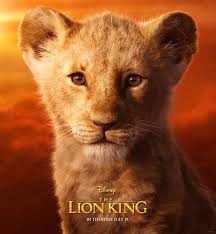
Music and the Fictive Dream: The Lion King’s Spirit – Beyoncé

Spirit was recorded for Disney’s newest remake of The Lion King, which came out in theaters this past weekend. Beyoncé released the song a couple of days before the movie premiered and I loved it so, after watching the movie on Friday night I decided to talk about this song for my post. If you haven’t seen the movie, it’s definitely worth the trip!

Background

The original The Lion King was first released on June 15, 1994, produced by Walt Disney and directed by Roger Allers and Rob Minkoff being influenced by the Christian Bible and Shakespeare’s Hamlet. It’s a Disney classic that boasts the title as the second highest-grossing movie release of 1994. It follows Simba, a young lion, from his early childhood to his adult years and tells the story of how his father dies and he is left with the decision to run away from a challenging situation or take his place as king of the Pride Lands. He encounters numerous characters along his journey, including the duo Timon and Pumba, who befriend him while he is away from home. After defeating his evil uncle Scar, Simba triumphs and ends the movie having a child of his own.

The movie’s 2019 remake was released on July 9, 2019 in Hollywood, but to the public it came out on the 19th. It was directed by Jon Favreau and again produced by Walt Disney. The plot remains the same, but this version differs because it’s sort of like a live-action remake; it uses photorealistic computer-generated animation to make it come to life. Favreau was also inspired to add elements from the Broadway adaption of the movie into this newer version.

How Spirit Ties Into the Movie

After Simba leaves following  the death of his father, his home is completely ruined under the ruling of Scar. The lions of the Pride no longer have control and live in fear of Scar’s pack of ravaging hyenas. Nala, Simba’s childhood best friend and later wife, takes it upon herself to leave the Pride Lands and she finds Simba again, living a much more peaceful life among the other animals of the forest. Through her persuasion and after a brief consultation with the shaman, Rafiki, Simba decides to return home and take his rightful place as king. Spirit is played at this moment and serves to invigorate both Simba and Nala as they race back to their beloved home, determined to fulfill their destinies and reclaim the throne.

How Spirit Ties Into the Bigger Picture

Simba’s battle with which path he should choose is something most, if not all, of us can relate to. Whether we should do what’s easy or what is right is a question that comes up at least once in a majority of our lives. Spirit can inspire us all to do what we are called to do, no matter how long it takes us or how hard it is. Songmeaningsandfacts.com says, “This is truly inspirational song. It weaves the tale of an individual who is prompted by the titular “spirit” to venture out into “that far off land” in search of a glorious image “of paradise”. This to a certain degree reads as if finding that “paradise” symbolizes the fulfillment of his “destiny”. 

Beyoncé – Spirit
Written By: Beyoncé, ILYA, and Labrinth 
Release Date: July 10, 2019, U.S.

Musical Analysis 

Lyrics

The lyrics are the star of this song, as they tell Simba’s story while simultaneously giving anyone a brighter outlook on their future. They fit perfectly into the movie, giving the characters a renewed sense of passion to follow their hearts. The song doesn’t have many words, it keeps it as simple as possible, hinting that it shouldn’t take much to get you to see that you should live out your dreams, no matter what.

“Yeah, yeah, and the water’s crashin’

Trying to keep your head up high

While you’re trembling, that’s when the magic happens

And the stars gather by, by your side”

It’s telling you to never give up, struggling just means you’re that much closer to the end!

Dynamics

Spirit is a very dramatic song in terms of dynamics. It drifts in between very quiet sections and bursts of thunderous sounds. Both the melody and Beyoncé’s voice are very loud, and they combine to almost yell at you while you are listening. I think this is because of the message that the song is portraying. It’s meant to be screamed at from the top of your lunges because it imitates how passionate you should be about reaching your true goals. Be bold and unafraid to go after what is yours.

My Opinion of Spirit

As a kid, The Lion King was the movie that made me fall in love with Disney. I remember watching it with my mom and she was just as fascinated as I was; it’s truly a story for any generation. The news of the remake excited me and I couldn’t wait to hear a new twist on my favorite songs from the original. With Spirit being a new addition, I was a little skeptical, but it fits perfectly into the movie without taking away any of the former’s glory. I even appreciated listening to it outside of the movie because of its inspiration to my everyday life.

Citations

“Beyoncé – SPIRIT.” Genius, 10 July 2019, genius.com/Beyonce-spirit-lyrics

“‘Spirit’ by Beyoncé.” Song Meanings and Facts, 17 July 2019, www.songmeaningsandfacts.com/spirit-by-beyonce/.

“The Lion King.” Wikipedia, Wikimedia Foundation, 20 July 2019, en.wikipedia.org/wiki/The_Lion_King

“The Lion King (2019 Film).” Wikipedia, Wikimedia Foundation, 21 July 2019, en.wikipedia.org/wiki/The_Lion_King_(2019_film).

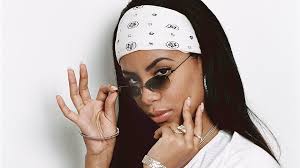
Role of the Performer: The Princess of R&B, Aaliyah

Biography

Aaliyah Dana Houghton was born on January 16, 1979 and her fame began shortly after. At ten years old, she made her debut on Star Search and was signed to a record label, owned by her uncle, at the age of twelve. R. Kelly soon after became her mentor and in May of 1994 she released her first album entitled Age Ain’t Nothing but a Number, which sold 74,000 copies in its first week. She left her uncle’s record label in 1996 and signed a deal with Atlantic Records which led to her second album, One in a Million. It reached the eighteenth spot on the Billboard 200and sold about eight million copies across the world. Her third and last self-entitled album came out in July of 2001. Unfortunately, she suffered an untimely death in August of that same year caused by a plane crash. A few singles, including Rock the Boat, were released after her death as well as two albums of unreleased songs and greatest hits. Her work has also been sampled and featured in new songs by artists such as Chris Brown and Tink.

Aaliyah – One in a Million
Written by: Missy Elliot & Timbaland
Release Date: August 1996, U.S.
Aaliyah – Rock the Boat
Written by:Eric Seats, Rapture Stewart & Static Major
Release Date: January 2002, U.S.

Musical elements

Beat

Her songs, One in a Million and Rock the Boat, stood out because they combined hip-hop and R&B seamlessly. The typical hip-hop beat went perfectly with her slow, seducing voice and this was something unlike anything else. She didn’t need to speed up her vocals to try and keep up with the tempo of the music and it worked out perfectly. In this way, she was able to control the music and take a beat that would’ve probably been used in a completely different way by another artist and make it her own.

Timbre

Aaliyah’s voice was honestly one in a million – very rare and extremely special. She sang in soprano, in a very light and almost hushed tone. She didn’t need to have extreme dynamics to get her point across or belt out super-high notes to be heard. Her quiet voice was still never overpowered and it served as just enough for her music. This added further to her sweet persona that made her who she was. She didn’t try to get on the mic and be anyone but herself. 

Aaliyah was an outstanding performer and her music has lasted throughout the years for many reasons. She brought a new attitude into the female R&B category by being able to sing seductive lyrics without being overly vulgar. Her voice was able to sound completely innocent even while she sang about switching positions or “rocking the boat”. She was dubbed the “Princess of R&B” for a good reason, her attitude was sweet enough to be a princess, but her vocal abilities were still soulful enough to let you know she belonged.     

Her death was sudden and came all too soon. With a career full of endless opportunities, as she was also an actor and model, Aaliyah will always be remembered as an icon of the early 2000s R&B scene.

To me, Aaliyah was a great performer and artist who fulfilled her role by just simply being herself. She was loved for bringing a fresh perspective to the R&B genre, relating to both younger and older fans. She didn’t use overpowering dynamics or extremely loud vocals to perform. Both songs above are on my list of all-time great songs and Aaliyah was and always will be one of the best R&B performers.

Sources

“Aaliyah.” Wikipedia, Wikimedia Foundation, 13 July 2019, en.wikipedia.org/wiki/Aaliyah

“Aaliyah – One in a Million.” Genius, 27 Aug. 1996, genius.com/Aaliyah-one-in-a-million-lyrics

“Aaliyah – Rock the Boat.” Genius, 15 Jan. 2002, genius.com/Aaliyah-rock-the-boat-lyrics

Anthony, Shonitria, and Shonitria Anthony. “7 Ways Aaliyah Changed The Game For Music And Fashion.” HuffPost, HuffPost, 25 Aug. 2015, www.huffpost.com/entry/7-ways-aaliyah-changed-the-game-for-music-and-fashion_n_55d73babe4b04ae49702d9f6

Reeves, Mosi, and Mosi Reeves. “7 Ways Aaliyah Changed R&B Forever.” Rolling Stone, 25 June 2018, www.rollingstone.com/music/music-news/7-ways-aaliyah-changed-rb-forever-248663/.

Taking a Musical Trip to Jamaica: Dancehall Analysis

History

Dancehall is a popular Jamaican genre originating in the 1970s. It derived from the well-known reggae music and eventually developed into its own category. Political and social shifts in Jamaican society caused the uprising of the genre, almost like a rebellion against the country’s leadership. “Shifts from a government focusing on collective enhancement to the individualistic Jamaican Labour Party of the 1980s, meant that lyrics began to take on a new sense of self. Themes of sexuality, violence and dancing took prominence.”

 It got its name from actual halls, locations where DJs performed their music to reach people that wouldn’t usually be able to hear it. Wikipedia.com says, “ The music needed to “get where the radio didn’t reach” because Jamaicans oftentimes were outside without radios. Especially because the audience of dancehall sessions were lower-class people, it was extremely important that they be able to hear music.”

Elephant Man – Pon de River, Pon de Bank
Written by: Elephant Man
Released: December 2, 2003, Jamaica
Beenie Man – King of the Dancehall
Written by: Beenie Man
Released: July 13, 2004, Jamaica

Musical Elements

Rhythm

Dancehall has a very distinct rhythmic element that you pick up on very quickly. Multiple notes combine on the dynamic beat and blend so well that it’s almost impossible to not make you move. It brings a ton of energy and life to the overall song, as its meant to. Dancehall artists perform over digital ‘riddims’ and bring a vibe that is unlike anything else. Interestingly, rhythms in the dancehall genre are usually shared by multiple songs. They’re given to multiple artists and meant to constantly be reinvented with new ideas and lyrics.

Tempo

Another key factor in the production of dancehall music is the quick, upbeat tempo. Dancehall music is defined as having anywhere between 80 to 120 BPMs. Pon de RiverPon de Bankhas a BPM of 101 and King of the Dancehall has a BPM of 105. This coincides directly with the entire attitude of the genre, because dancing and violence are at its core. Fast-paced beats are the very heart of the genre.

Personal Preferences

Jamaican dancehall is one of those genres I just have to listen to once in a while. It elicits a really carefree vibe and even if you don’t understand all the words, it makes you want to move. The irresistible rhythm and pulsing tempo, along with other key elements, definitely bring on a party mood. Although, it’s too loud and fast-paced for my everyday lifestyle, I still enjoy listening when I’m feeling festive.

MLA Citations

Cooper, Carolyn J. “Dancehall Music.” Encyclopædia Britannica, Encyclopædia Britannica, Inc., 17 Jan. 2014, www.britannica.com/art/dancehall-music

“Dancehall.” Wikipedia, Wikimedia Foundation, 1 July 2019, en.wikipedia.org/wiki/Dancehall

Editor, The Gryphon Web. “Dancehall: A History.” The Gryphon, 30 Apr. 2017, www.thegryphon.co.uk/2017/04/28/sim-simma-dancehall-a-history/.

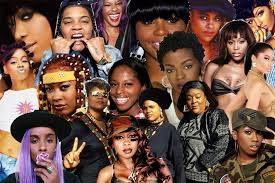
The Evolution of Female Rappers from the Late 80s to the Present

History

Rap, as we know it today, emerged in the 1970s. DJ Kool Herc is known for creating it in the Bronx, New York City. He began rapping over hip-hop beats as he was DJing to a crowd. Eventually, it was fully recognized as an independent genre. Rap was immediately dominated by men and still is to this day. Females who enter the field fight hard to be accepted and seen as equal to their male counterparts. For this post, I’m going to be looking into the earliest female rappers and how their music differs from the newer generation.

MC Lyte was one of the first females to begin rapping. She started in the 80s and stood out for being unapologetically herself. Udiscovermusic.com says, “Lyte’s flow, lyrical precision and refusal to self-censor gained her industry attention quickly.” She went on to become the first female solo rapper to release a full-length album and to be nominated for a Grammy. 

She helped pave the way and soon there were many others, such as Queen Latifah, Foxy Brown, Lil’ Kim, and Missy Elliot. They all brought something new and fresh to the table, giving the guys a run for their money. Headstuff.org says, “As the decade continued so too did the quality of releases from the women in hip-hop.” Eventually, we get to the 2000s. With artists like Nicki Minaj, Cardi B, and Megan thee Stallion, I think it’s safe to say that female rappers have solidified their place in the industry.

MC Lyte – Paper Thin
Written by: The King of Chill & MC Lyte
Released: September 13, 1988, U.S.
Nicki Minaj – Megatron
Written by: Haldane Brown, Andrew “POP” Wansel, Brittany Coney, Blu June & Nicki Minaj
Released: June 21, 2019, U.S.

Musical Elements

Lyrics

A very obvious difference between early female rappers and female rappers today, is what they actually rap about. In Paper Thin, MC Lyte talks about not taking a guy seriously when he tries to come on to her, letting his words go in one ear and out of the other. Her beginning lines are “When you say you love me, it doesn’t matter/It goes to my head as just chit chatter”. Back then, I think it was important for females to portray a less “feminine” role of showing emotions and even referencing their bodies because they wanted to sort of fit in with male rappers. 

It was unheard of to talk about your body in a provocative way, until Lil’ Kim and others came on the scene. I-d.vice.com states, “It wasn’t until the arrival of Lil Kim and Foxy Brown in the mid-90s that a contrary idea of what a female rapper could look like was put forward. Kim and Foxy were outrageous and they outraged with their lascivious lyrics and clothes.”

Female artists in the last couple of years certainly haven’t shied away from seductive lyrics. Nicki Minaj’s latest song Megatron offers the lyrics, “Feel up, baby, feel on me/Pull up if you’re feeling lonely”. 

Melody

Another huge difference between the above songs is the melody. Paper Thin has a simple, slow melody that makes you want to nod your head to the beat. Her voice subtly accompanies the melody, almost blending in with it because it never overpowers. At the end, it’s even unaccompanied.         

Megatron is the complete opposite. The lively tune instantly makes you want to get up and dance, or wish that you could. It’s also a lot quicker than MC Lyte’s tune. Apparently, the rhythm embodies the Jamaican genre of dancehall, known for its lively, flowing movement. Forbes.com says, “Based on familiar dancehall rhythms used as insanely catchy hooks, “Megatron” turns any dance floor into a beach side club the minute it begins. It’s the sort of song that will have everyone moving, possibly at functions for years to come.”

Personal Preferences

Having always been a fan of female rap artists, I appreciate both aspects of the music and what they offer individually. My mood usually dictates which era I listen to. If I’m feelng more relaxed and just maybe hanging out in the afternoon, I’ll definitely turn on a track like Paper Thin. I tend so save Megatron-type songs for a more upbeat mood. 

I’m grateful for the differences that they have because it reveals more about the time that they lived in. I’m curious to see how female rap music will change in the next couple of years.

MLA Citations

Collins, Hattie. “2017 Was the Year the Female Rapper Got the Respect She Deserved.” I, VICE, 22 Dec. 2017, i-d.vice.com/en_uk/article/a3nvqp/2017-was-the-year-the-female-rapper-got-the-respect-she-deserved

“MC Lyte – Paper Thin.” Genius, 13 Sept. 1988, genius.com/Mc-lyte-paper-thin-lyrics

“Nicki Minaj – MEGATRON.” Genius, 21 June 2019,genius.com/Nicki-minaj-megatron-lyrics

Team, uDiscover. “Let’s Talk About The Female MCs Who Shaped Hip-Hop.” UDiscover Music, 9 Dec. 2018, www.udiscovermusic.com/stories/the-female-rappers-who-shaped-hip-hop/

“THE PLAYLIST #20 | Women’s Day Hip-Hop: The Greatest Female Rappers Of All Time.” HeadStuff, 14 Mar. 2017, www.headstuff.org/entertainment/music/playlist-womens-day-hip-hop-greatest-female-rappers-time/.

McIntyre, Hugh. “Nicki Minaj Returns With ‘Megatron,’ The Party Song Of The Summer.” Forbes, Forbes Magazine, 21 June 2019, www.forbes.com/sites/hughmcintyre/2019/06/21/nicki-minaj-returns-with-potential-new-summer-smash-megatron/#13db60f162fa.

I Have Nothing by Whitney Houston – Musical Analysis #2

Link: https://www.youtube.com/watch?v=FxYw0XPEoKE

Written by: David Foster and Linda Thompson

Released: February 1993, United States

Whitney Houston is one of my all-time favorite artists and I Have Nothing is one of her best songs, in my opinion. The way she carries her emotions through her voice is incredible. Whenever I hear it I think of a really pure form of love. Love, so deep and real that without it you feel like you don’t have anything left.

Lyrics

My favorite part about this song is the lyrics. She begins the song with “Share my life, take me for what I am. Because I’ll never change all my colors for you.” She’s saying that as much as she wants to be with this person, she won’t change who she is. That’s important because you should always remain true to yourself before anyone else. Throughout the rest of the song she emphasizes on how she feels she has nothing with her lover, but she holds fast to the fact that she will remain true to herself.

Form

This song begins with the first verse which has the same melody as the rest of the song, but isn’t repeated again. After the lines “Just all that you are and everything that you do” it goes into the pre-chorus. The pre-chorus is a lot shorter than the chorus which starts with “But don’t make me close one more door.” From there is another verse followed by the pre-chorus and chorus again. Lastly, is the outro beginning at “Don’t you dare walk away from me.” This simple, yet sophisticated form keeps the song simple. I think this allows us to focus more on her amazing voice.

Dynamics & Range

            Whitney is known for her great range and powerful dynamics. She starts off softly as if she is being gentle with the words she chooses. Her gradual shift from quiet to loud says to me that she is gaining confidence as she speaks – confidence to say exactly what she feels without fear of how the other person will take it. I think that’s relatable because expressing your feelings to someone can be intimidating. The range is shown by how deep her voice is at the beginning to how high she actually goes in the chorus. Divadevotee.com has on their site that her voice has 3.2 octaves, which is incredible.

Meter & Rhythm 

            I think thatI Have Nothing is written in the more complex meter of 6/8. The emphasis is on the first and fourth subdivisions of the beat. It’s kind of hard because at time it sounds as if there are only three. This compliments the changing rhythm very well. As she begins to hold longer notes, the steady beat helps the listener to follow along without too much diversion. Rebelmusicteacher.com says, “ In addition to the genius modulation, the song is also written in 6/8 time (symmetrical compound meter) with the addition of scattered measures of 3/8 time prior to key changes.”

MLA Citations

“Whitney Houston – I Have Nothing.” Genius, 17 Nov. 1992, genius.com/Whitney-houston-i-have-nothing-lyrics.

“I Have Nothing.” Wikipedia, Wikimedia Foundation, 17 June 2019, en.wikipedia.org/wiki/I_Have_Nothing.

Langerholc, Emily. “Nothing But Key Changes: Flattened Submediant & Direct Modulation in Whitney Houston’s ‘I Have Nothing.’” Rebel Music Teacher, Rebel Music Teacher, 22 Aug. 2018, www.rebelmusicteacher.com/blog/2018/8/23/something-something-modulation-in-whitney-houstons-i-have-nothing.

Man, Muffin. “Whitney Houston – Vocal Profile/ Range.” Diva Devotee, 1 Jan. 1970, http://www.divadevotee.com/2009/03/whitney-houston-vocal-profile.html

Schoolin’ Life by Beyoncé – A Musical Analysis

I first heard this song almost two years ago while on a road trip with a couple of my friends. I fell in love with it because of how it made me feel – inspired to live life to my fullest potential. It gave me so much energy and instantly became one of my favorite songs of all time!

Here’s a link to the full song: Schoolin’ Life by Beyoncé – 2011, USA.

Written by: Beyonce Knowles, Terius Nash, Shea Taylor, Carlos Mckinney

Lyrics

Beyoncé received a bit of criticism for one of the verses in this song. “Who needs a degree when you’re schoolin’ life”, she sings at the end of the chorus. Some people think it’s meant to brag about her success despite having not gone to college.

Personally, I think it says yes I did it and so can you! To me she’s saying don’t let society tell you what to do with your life, focus on being happy at whatever you do. She inspires generations of girls with the lines “This is for them twenty somethings, Time really moves fast you were just sixteen, This is for them thirty somethings, That didn’t turn out exactly how your mom and dad wanted you to be”.

Rhythm & Beat

One of my favorite parts about Schoolin’ Life, as I think most will agree, is the upbeat tempo of the song. It’s almost impossible not to dance or nod your head to it. Beyoncé does a great job at keeping the rhythm simple so anyone can sing along. Since this song is so relatable I think it being easy to follow makes it even more enticing, especially combined with the steady beat. Towards the end she drags out the rhythm of the bridge and speeds it right back up to end the song.

Harmonic Texture

I would say this song is an example of homophonic texture. The joyous melody is definitely the highlight of the piece, while Beyoncé’s voice serves as a sweet companion. While she details some of her childhood memories, her voice never clashes with the melody. They combine perfectly to achieve this great song.

Sources:

“Beyoncé – Schoolin’ Life.” Genius, 28 June 2011, genius.com/Beyonce-schoolin-life-lyrics.

“’Schoolin’ Life’: Teaching Beyoncé and Engaging Youth.” The Feminist Wire, 22 Feb. 2012, thefeministwire.com/2012/02/schoolin-life-teaching-beyonce-and-engaging-youth/.

“Schoolin’ Life.” Wikipedia, Wikimedia Foundation, 13 Mar. 2019, en.wikipedia.org/wiki/Schoolin’_Life.

Intro Blog

Hello everyone! Thanks for visiting my blog. I’m Aniyah Ruffin and I’m taking this class to earn an associate’s degree in general studies. I’ve been in Alaska for a little over 2 years now and started taking classes at UAF about a year ago. I’m originally from Alabama, where most of my family still resides, and I’m looking forward to relocating back to warmer climates in the next couple  of years.        

I’ve liked music for about as long as I can remember. One of my older cousins was in our local high school band and that inspired me to join. I played the alto saxophone for about two years and I loved it. I’m pretty much open to listen to any genre, but my favorites are R&B, soul, hip-hop, and pop. I’ve actually never attended a concert, but I plan to go to one next year.

Here’s a link to one of my favorite songs right now:

Design a site like this with WordPress.com
Get started